
How to Choose a Mobile App Development Company in Hyderabad
Planning to build a mobile app? Learn how to compare app development companies in Hyderabad based on experience, technology, cost, security, ownership, and post-launch support.
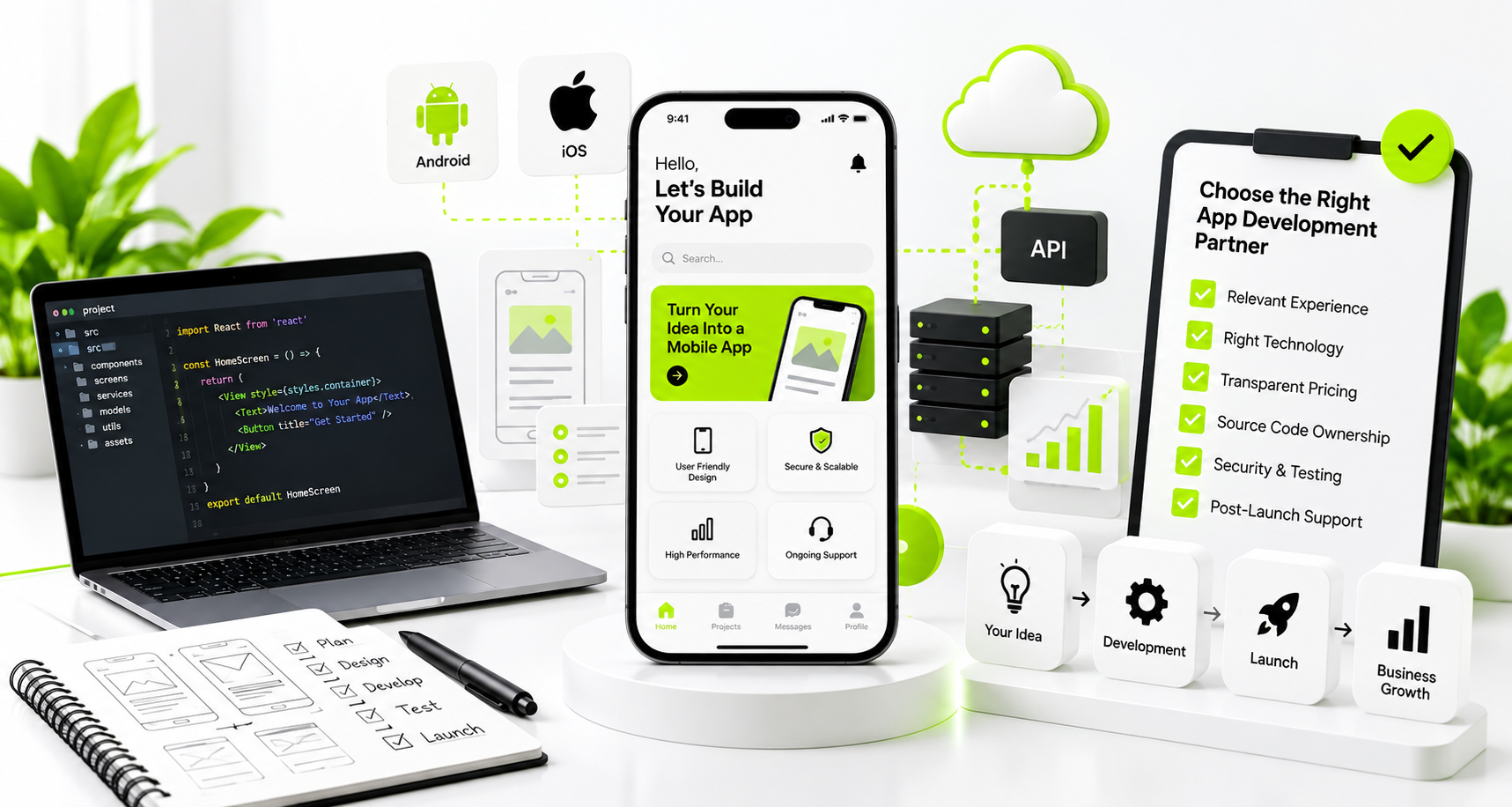
Choose a mobile app development company in Hyderabad by evaluating its experience, development process, technical expertise, and long-term support—not just the initial quotation. A successful mobile application should solve a genuine business problem, offer a smooth user experience, protect customer information, and remain reliable as your business grows.
Whether you are launching a startup, building an e-commerce application, digitising business operations, or extending an existing website into a mobile app, the development partner you choose can influence your costs, launch timeline, and future flexibility.
Define your mobile app requirements before contacting developers
Start by identifying the problem your application needs to solve. Decide who will use it, what they should be able to do, and how the application will support your business objectives.
Prepare a basic brief covering:
- Your target audience and primary user journeys.
- Whether you need an Android app, an iOS app, or both.
- Essential features such as registration, payments, notifications, bookings, or dashboards.
- Admin panels, APIs, third-party integrations, and existing systems.
- Your expected budget, launch timeline, and future expansion plans.
- How you will measure success, such as completed bookings, repeat purchases, or reduced manual work.
A clear brief helps developers estimate the work more accurately and recommend a practical first release instead of adding unnecessary features.
Check the company's mobile app development experience
Review previous projects that are relevant to your business model. An e-commerce application requires different capabilities from a logistics app, a healthcare booking platform, or a subscription-based SaaS product.
Ask to see working applications, published app-store listings where available, or demonstrations of completed projects. Find out which features the company built, what challenges it addressed, and whether the application is still maintained.
Explore NCC's portfolio and case studies to understand the types of digital products and business solutions it develops.
Compare Android, iOS, and cross-platform development
The right technology depends on your requirements, budget, performance needs, and target users. Ask the development company to explain its recommendation and the trade-offs involved.
- Native Android development: Suitable when you need an Android-focused application and platform-specific capabilities.
- Native iOS development: Appropriate for applications that require a dedicated Apple-platform experience.
- Cross-platform development: Frameworks such as Flutter or React Native can help deliver applications across platforms using a shared codebase, although some features may still require platform-specific work.
For many businesses launching on both Android and iOS, cross-platform development can be a practical option. However, the decision should be based on the application's complexity and long-term requirements rather than technology trends alone.
Understand the complete cost of mobile app development
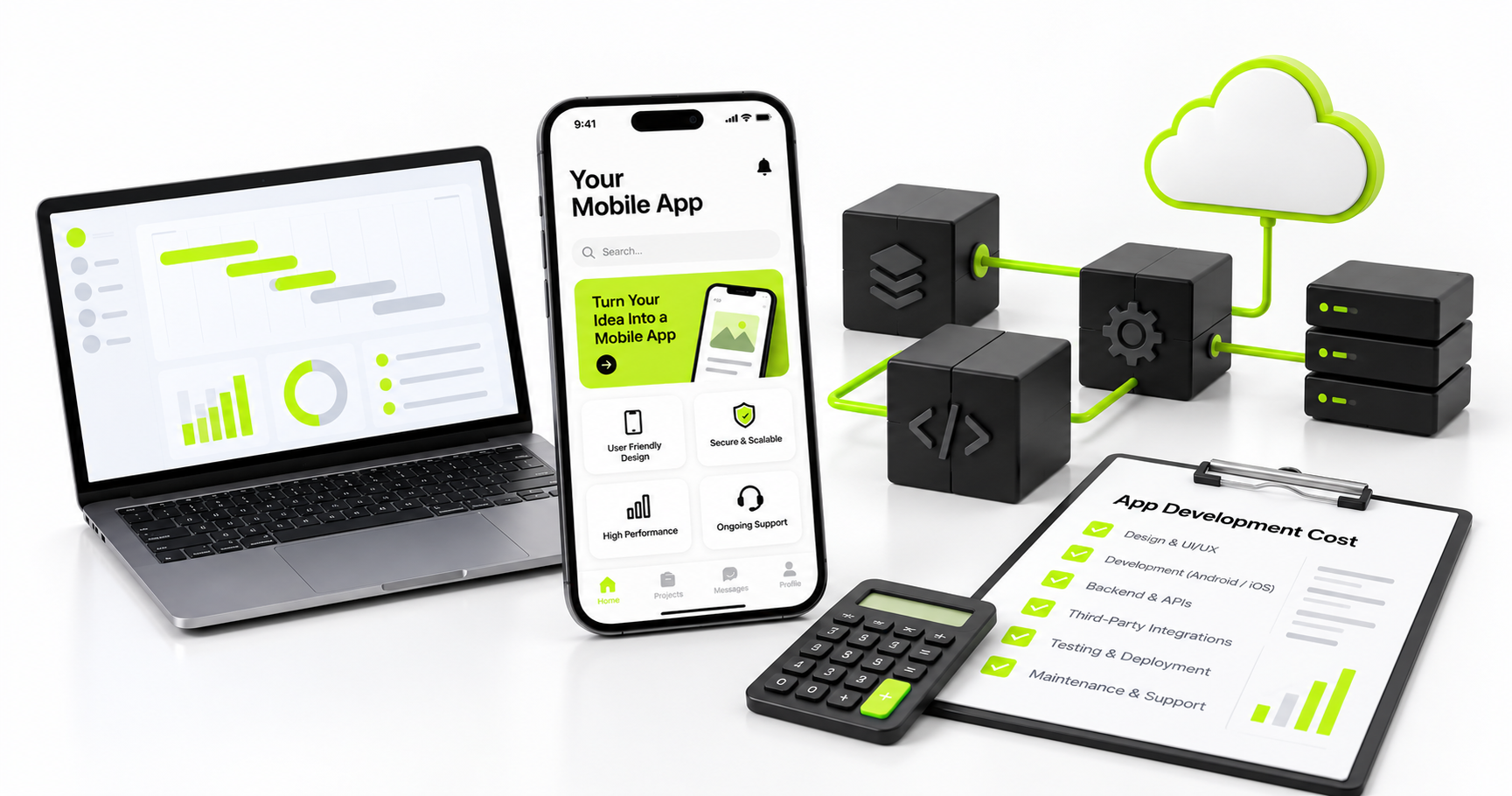
The cost of developing a mobile application depends on its features, design complexity, backend architecture, integrations, testing requirements, and ongoing maintenance.
A simple application with a limited number of screens will generally require less effort than a marketplace with multiple user roles, payment processing, real-time tracking, and an administrative dashboard.
Request a proposal that separates the following components:
- Requirements analysis and UI/UX design.
- Android and iOS application development.
- Backend development, APIs, and database setup.
- Admin dashboard and third-party integrations.
- Testing, deployment, and app-store submission support.
- Cloud hosting, external service charges, maintenance, and future enhancements.
For a more useful comparison, ask each company to quote against the same feature list and clearly document exclusions, assumptions, and additional charges.
Evaluate design, usability, and performance
A mobile application should make important tasks easy to complete. Users should be able to navigate screens intuitively, understand the available actions, and recover from errors without confusion.
Ask how the team handles wireframes, interactive prototypes, accessibility, different screen sizes, loading states, and slow network connections. Request a design review before full development begins.
Performance should also be tested on realistic devices and network conditions. An attractive interface is not enough if the application crashes, loads slowly, or loses information during an interrupted session.
Ask how security and customer data are protected
Mobile applications may process personal information, payment-related data, location details, and business records. Ask how authentication, access permissions, secure API communication, data storage, and session management will be implemented.
Discuss the testing process, dependency updates, vulnerability handling, backup arrangements, and incident response responsibilities. Security requirements should reflect the sensitivity of the information and the risks associated with your application.
For mobile security guidance, consult the OWASP Mobile Application Security Verification Standard. The standard can help structure security requirements and assessments, but following a framework should not be treated as a guarantee that an application is completely secure.
Confirm source code ownership and project handover
Before signing the agreement, clarify who owns the application source code, UI designs, documentation, and custom-developed components. Review the contract for third-party libraries, licences, reusable components, and any restrictions on modification or transfer.
Confirm who controls the source-code repository, cloud infrastructure, domain, database, Google Play Console, and Apple Developer account. These arrangements should be documented and appropriate access should be available to your business.
At handover, request deployment instructions, technical documentation, configuration details, backup procedures, and a clear explanation of how the application can be maintained or transferred to another team.
Check testing, deployment, and app-store support
App development does not end when the screens are complete. The application needs functional testing, device compatibility checks, API testing, security checks, and validation of important user journeys.
Ask whether the proposal includes support for Google Play and Apple App Store submissions, store listing requirements, privacy disclosures, review feedback, and release management. Store approval is controlled by the respective platforms and should not be guaranteed by a developer.
Agree on acceptance criteria before development starts so both parties understand what must work before the application is considered complete.
Plan for maintenance and future growth
After launch, your application may need operating-system compatibility updates, bug fixes, security patches, analytics improvements, and new features. Confirm how these services are priced and who will be responsible for them.
Ask about support hours, response-time commitments, escalation procedures, monitoring, backups, and infrastructure costs. Distinguish between fixing defects covered by an agreed warranty and developing new functionality under a separate maintenance or enhancement arrangement.
Questions to ask before selecting an app development company
- Have you built applications with comparable features or workflows?
- Which technologies do you recommend, and why?
- Who will manage design, development, testing, and delivery?
- What is included in the quotation, and what costs extra?
- How will progress be demonstrated and deliverables accepted?
- Who owns the source code and controls the production accounts?
- What testing and security measures are included?
- What support is available after launch?
Compare the answers with written evidence, demonstrations, and contract terms rather than relying solely on sales presentations.
Does choosing a Hyderabad-based app development company matter?
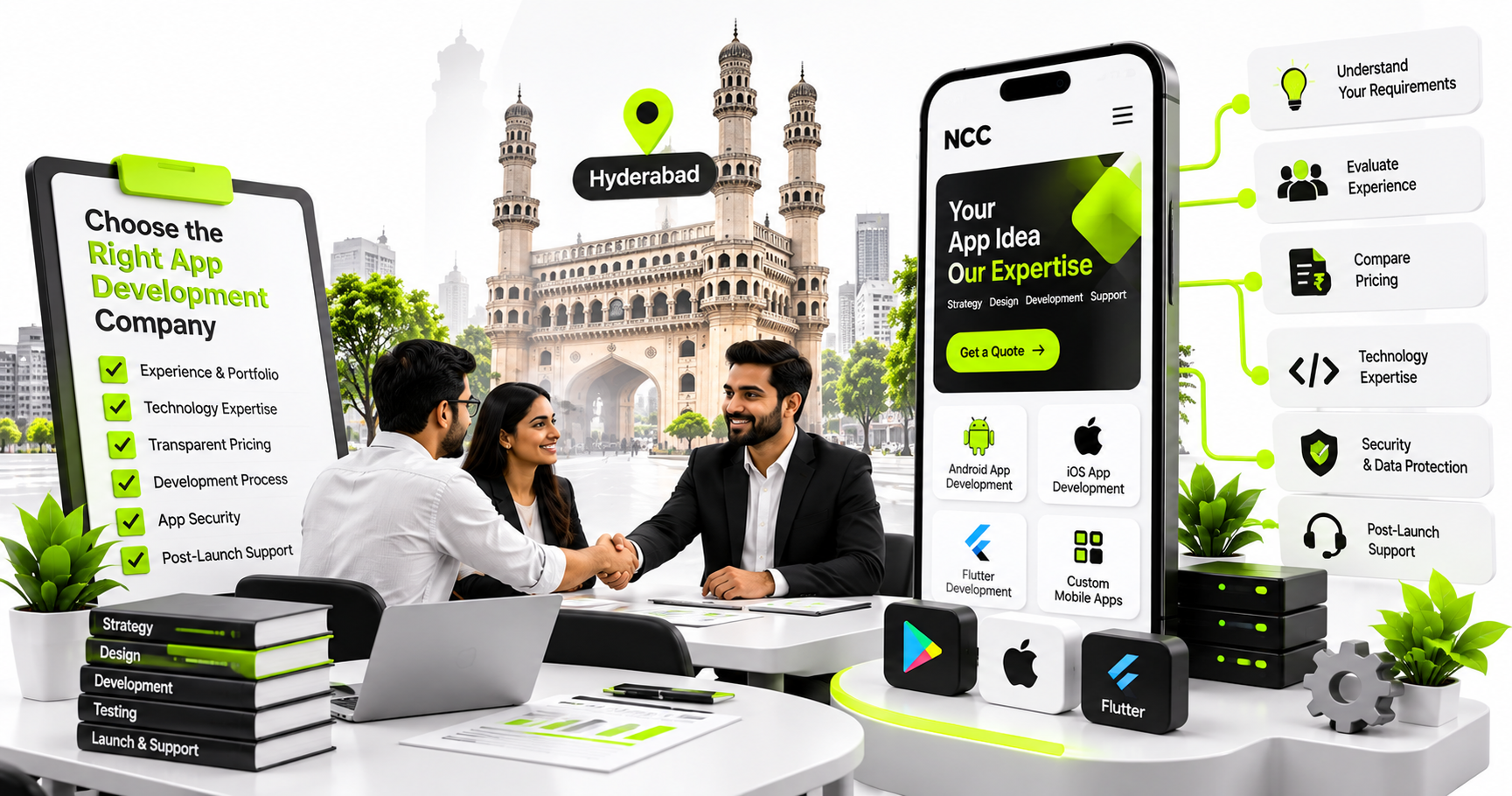
A local development partner can make meetings, workshops, and collaboration easier for businesses in Hyderabad. However, location alone does not establish quality. Evaluate the team's expertise, communication, delivery process, transparency, and ability to support your application over time.
Next Code Company works with businesses to develop digital products tailored to their requirements. If you are planning an Android application, an iOS app, or a cross-platform product, discuss your mobile app development project with NCC to explore the scope, priorities, and a practical approach to the first release.
Published October 11, 2026. This article is a buyer's guide, not a ranking of development companies or a guarantee of project costs or outcomes.
Related articles

Have a story worth engineering?
We turn strategy into shipped software. Book a free consultation and we'll map the build, the timeline and the cost.