
How Much Does Mobile App Development Cost in India in 2026?
Discover mobile app development costs in India in 2026, including Android and iOS apps, MVPs, e-commerce applications, backend development, maintenance, and the factors that influence your budget.
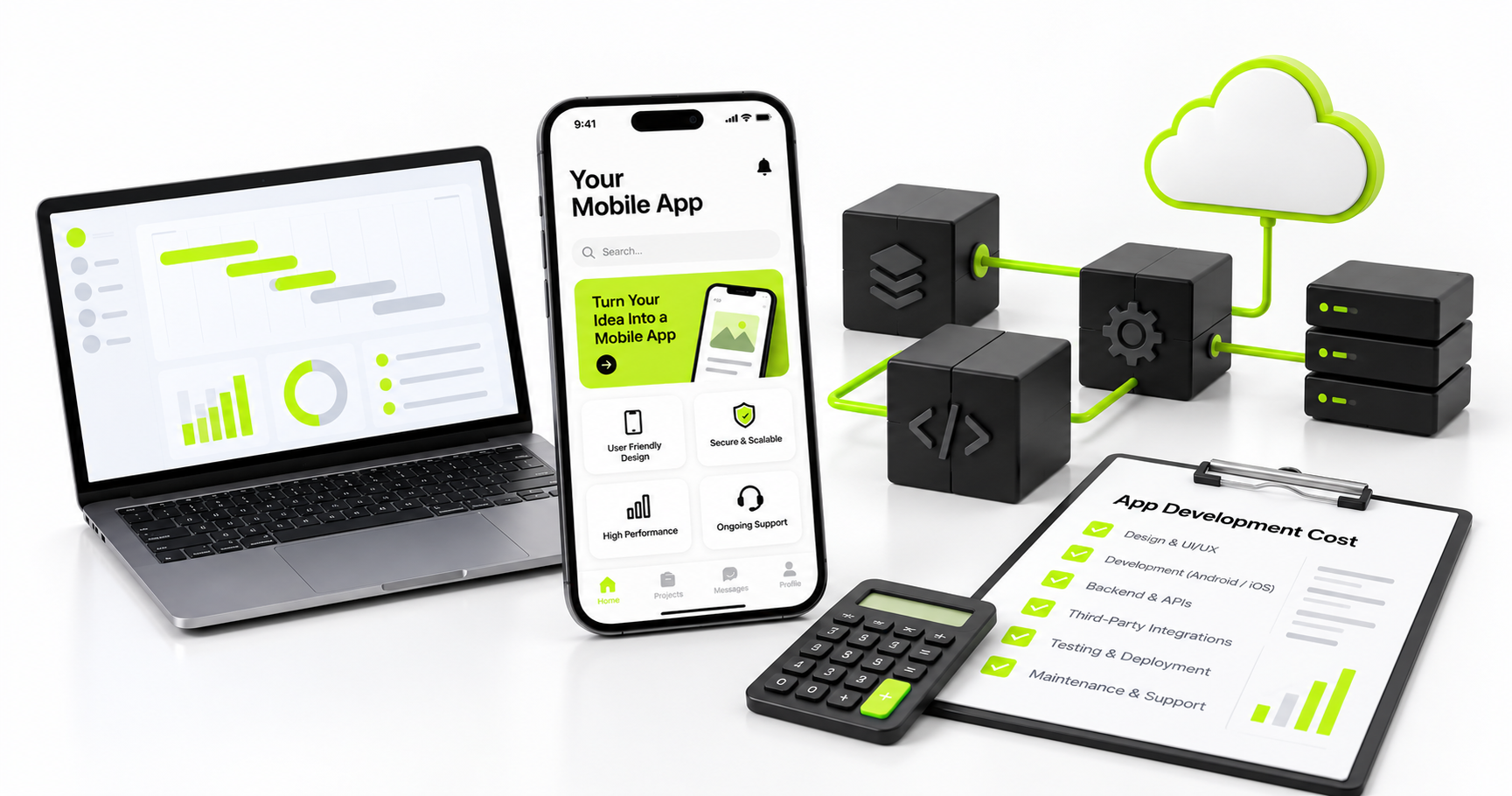
Mobile app development in India can cost anywhere from a few lakh rupees for a focused first release to tens of lakhs or more for a complex digital platform. The actual price depends on what your application needs to do, how many users and platforms it supports, the backend systems involved, and the level of testing required before launch.
If you are a startup founder, business owner, or enterprise planning an Android or iOS application, understanding these cost factors can help you set a realistic budget and compare development proposals confidently.
In this guide, we explain mobile app development costs in India in 2026, the difference between simple apps and complex platforms, the main expenses to consider, and how to plan your first release without investing in unnecessary features.
How much does mobile app development cost in India in 2026?
There is no single price for every mobile application. A simple informational app is very different from an e-commerce platform with payments, inventory synchronisation, delivery tracking, and an administrative dashboard.
For initial budgeting, the following are illustrative ranges for professionally developed applications in India. Actual quotations can vary significantly depending on scope, team structure, integrations, design requirements, and delivery responsibilities.
| App complexity | Indicative development budget | Typical scope |
|---|---|---|
| Basic application | ₹1.5 lakh–₹4 lakh | Content, forms, basic navigation, and limited functionality |
| Startup MVP | ₹3 lakh–₹8 lakh | Core features, user accounts, and a basic backend where required |
| Business application | ₹8 lakh–₹20 lakh | Payments, APIs, notifications, dashboards, and more complex workflows |
| Complex platform | ₹20 lakh–₹40 lakh+ | Multiple user roles, real-time functionality, extensive integrations, or marketplace features |
These figures are planning estimates, not fixed market prices or a quotation from Next Code Company. Some small projects may cost less, while regulated, enterprise-grade, or highly customised applications can exceed these ranges. Confirm exactly what is included before comparing proposals.
What factors determine mobile app development cost?
1. Number of features and user roles
The features you choose have a direct effect on development effort. A simple business app with company information and enquiry forms requires less engineering than an application with customer accounts, payments, booking management, chat, and order tracking.
User roles also matter. A delivery platform may require separate experiences for customers, drivers, and administrators. Each role introduces additional screens, permissions, workflows, and testing requirements.
Start by identifying the essential features your business needs at launch. Features that are not necessary for validating the product can be planned for a later phase.
2. Android, iOS, or both
Your target platforms influence the development approach and budget.
- Android app development: Focuses on devices running Android and may be suitable when your initial target audience primarily uses Android phones.
- iOS app development: Targets Apple devices and may be important when your customers or business requirements call for an iPhone application.
- Cross-platform development: Technologies such as Flutter and React Native can support Android and iOS using a shared codebase for much of the application.
Building separate native applications can require more implementation and maintenance effort. Cross-platform development may reduce duplicated work, although platform-specific functionality and additional testing can still be necessary.
The right choice depends on your features, user expectations, performance requirements, and long-term roadmap—not simply on which technology is cheapest.
3. UI/UX design and user experience
Design affects both the appearance of your app and how easily customers can use it. A straightforward interface with standard components generally requires less effort than a highly customised experience with animations, interactive maps, complex dashboards, and multiple user journeys.
A professional design process may include wireframes, user flows, visual design, clickable prototypes, and usability reviews. Agree on the design scope before development so that major interface changes do not create avoidable rework.
4. Backend development and database architecture
The mobile application is often only one part of the product. Many business apps need a backend to store information, manage accounts, process transactions, and synchronise data between users and devices.
Backend requirements may include:
- User authentication and role-based access.
- Database design and data management.
- APIs connecting the mobile app to business systems.
- Admin dashboards and reporting.
- Cloud storage, backups, and monitoring.
- Security controls and performance optimisation.
If you already have a working website, database, or backend API, some components may be reusable. For example, an e-commerce Android app can display the same product catalogue as an existing website when both applications connect to the same backend and share the appropriate data model and APIs.
5. Third-party integrations
Integrations can add significant value, but each one introduces implementation, testing, and sometimes recurring service costs.
- Payment gateways such as Razorpay or Cashfree.
- SMS and OTP verification services.
- Push notifications.
- Maps, geolocation, and delivery tracking.
- WhatsApp Business integrations.
- CRM, ERP, accounting, and inventory systems.
- AI APIs, document processing, and analytics tools.
Before requesting a quotation, list every integration you expect to use. Confirm whether the development company will handle configuration, API access, error handling, testing, and any provider-specific approval process.
Mobile app development cost by business type
The business model can be a useful starting point when estimating your budget. The following ranges are illustrative and depend on the functionality included.
| Application type | Indicative budget | Features affecting cost |
|---|---|---|
| Business information app | ₹1.5 lakh–₹4 lakh | Content, contact forms, and notifications |
| Booking application | ₹3 lakh–₹8 lakh | Availability, appointments, reminders, and payments |
| E-commerce app | ₹4 lakh–₹12 lakh | Catalogue, cart, checkout, orders, and inventory |
| Delivery platform | ₹8 lakh–₹20 lakh+ | Customer and driver workflows, location tracking, and delivery management |
| Marketplace application | ₹10 lakh–₹25 lakh+ | Multiple user roles, listings, commissions, transactions, and administration |
| Enterprise or SaaS platform | ₹15 lakh–₹40 lakh+ | Complex permissions, integrations, analytics, and scalability |
These categories overlap because the name of an app does not determine its complexity. A catalogue-only shopping app may be relatively straightforward, while a marketplace with multiple vendors, payouts, disputes, and live tracking involves substantially more work.
How much does Flutter app development cost?
Flutter is a cross-platform framework that enables developers to build applications for multiple platforms using a shared codebase for much of the product.
It can be a practical option for startups and businesses that want to launch on Android and iOS without maintaining two entirely separate implementations.
However, Flutter does not automatically make every project cheaper. The final cost still depends on backend development, design, integrations, testing, and platform-specific requirements.
When evaluating a Flutter proposal, ask whether it includes both Android and iOS releases, device testing, production deployment, and any native components needed by your application.
What additional costs should you budget for?
The initial development quotation is not necessarily the total cost of owning an application. Your business may also need to budget for the following expenses.
- Cloud hosting and databases: Costs depend on usage, storage, traffic, and infrastructure choices.
- External APIs: Maps, SMS, AI services, and other providers may charge based on usage or subscriptions.
- App-store accounts: Google Play and Apple have developer registration or membership requirements and applicable fees.
- Maintenance: Bug fixes, dependency updates, operating-system compatibility, and security patches may require ongoing work.
- New features: Enhancements requested after launch may fall outside the original scope.
- Taxes and commercial charges: Check whether applicable GST and other charges are included in the quotation.
- Marketing and customer acquisition: Launching the app does not automatically generate downloads or customers.
For Apple distribution, the Apple Developer Program lists an annual membership fee of US$99, with local-currency pricing available in eligible regions. Check the official Apple Developer Program page for current details. Other platform and service fees should be verified directly with their providers.
Ask your development partner to separate one-time development expenses from recurring operational costs. This makes it easier to estimate your total first-year budget.
How long does it take to develop a mobile app?
Timelines depend on the scope, team availability, integrations, testing requirements, and how quickly decisions and feedback are provided.
- Basic application: May take several weeks for a tightly defined scope.
- Startup MVP: Often requires around two to four months, depending on the features and platform approach.
- Business application: May take several months when it includes a backend, payments, and an admin panel.
- Complex marketplace or enterprise product: May require several months or longer, especially when multiple systems and user roles are involved.
These are broad planning estimates rather than delivery commitments. Request a milestone-based schedule covering discovery, design, development, testing, and release. Third-party approvals, delayed content, and changing requirements can affect the final timeline.
How can you reduce mobile app development costs without compromising quality?
Reducing costs does not mean choosing the lowest quotation. It means focusing investment on the work that creates the most value for your users and business.
- Start with an MVP: Build the smallest useful version that solves the primary problem.
- Prioritise features: Separate must-have functionality from enhancements that can wait.
- Reuse existing systems: Where technically appropriate, integrate with an existing website, database, or API rather than rebuilding everything.
- Choose technology based on requirements: Compare native and cross-platform options before committing.
- Approve designs early: Review wireframes and prototypes before full implementation.
- Define acceptance criteria: Agree on what completion means for each milestone.
- Plan for maintenance: Clear architecture, documentation, and testing can reduce avoidable costs later.
A phased release also helps you validate demand before investing in advanced features. Use customer feedback and actual usage data to guide the next stage of development.
How to choose the right mobile app development company
Before signing a contract, evaluate more than the initial price. Ask the company to explain its development process, show relevant work, identify the proposed team, and document exactly what the quotation includes.
Check the following points:
- Relevant experience with similar applications or business workflows.
- A clear list of features, integrations, and supported platforms.
- Transparent pricing, milestones, exclusions, and change-request terms.
- Testing, security, and deployment responsibilities.
- Source-code ownership, repository access, and account control.
- Post-launch support, maintenance, and infrastructure responsibilities.
Compare proposals against the same requirements. A lower quotation may exclude design, backend development, testing, or support that another proposal includes.
Next Code Company helps businesses plan and develop digital products around their operational requirements. Explore our portfolio and case studies to review relevant work, or discuss your mobile app development project with NCC to identify a suitable scope and next steps.
Frequently asked questions
What is the minimum cost to develop a mobile app in India?
The minimum depends on the required functionality and delivery scope. A small, focused application may cost a few lakh rupees or less in certain circumstances, while a production-ready app with a backend, integrations, and extensive testing requires a larger budget. Request an estimate based on a written feature list.
Is Android app development cheaper than iOS app development?
Not necessarily. Costs depend on features, platform-specific requirements, devices to be supported, and the development approach. Building for one platform can reduce the initial scope, but the relative cost depends on the project.
Is Flutter cheaper than building separate Android and iOS apps?
Flutter can reduce duplicated development effort by sharing much of the code across platforms. However, native integrations, platform-specific functionality, and testing can still affect the total cost. Compare proposals using the same feature requirements.
Does mobile app development include a backend and admin panel?
Not always. Some quotations cover only the mobile application interface, while others include APIs, database development, and an admin dashboard. Confirm these deliverables in writing before approving a proposal.
How much does mobile app maintenance cost?
Maintenance depends on application complexity, infrastructure, support commitments, and the frequency of updates. Ask for a separate maintenance estimate covering defect fixes, security updates, operating-system compatibility, monitoring, and feature enhancements.
Can an existing website share products and data with a mobile app?
Yes, when the website and mobile application use a compatible shared backend or API. For example, product listings, prices, stock availability, and orders can remain synchronised when both systems are designed to use the same data source. The existing architecture must be assessed before confirming the integration scope.
Final thoughts
The cost of mobile app development in India in 2026 depends on the product you need to build—not simply the number of screens or the technology used. Features, backend complexity, integrations, testing, and long-term ownership all influence the investment.
Define your requirements, prioritise the first release, compare like-for-like proposals, and budget for the application after launch as well as during development. A well-scoped first version gives your business a practical foundation to learn, improve, and grow.
Published October 11, 2026. Cost figures are indicative planning estimates, not verified market averages or a quotation. Actual pricing and timelines depend on project scope and delivery requirements.
Related articles
Have a story worth engineering?
We turn strategy into shipped software. Book a free consultation and we'll map the build, the timeline and the cost.