
Android vs iOS App Development: Which Should Your Startup Choose?
Should your startup build an Android app, an iOS app, or both? Compare development costs, target audiences, features, maintenance, and launch strategies to choose the right platform for your business.
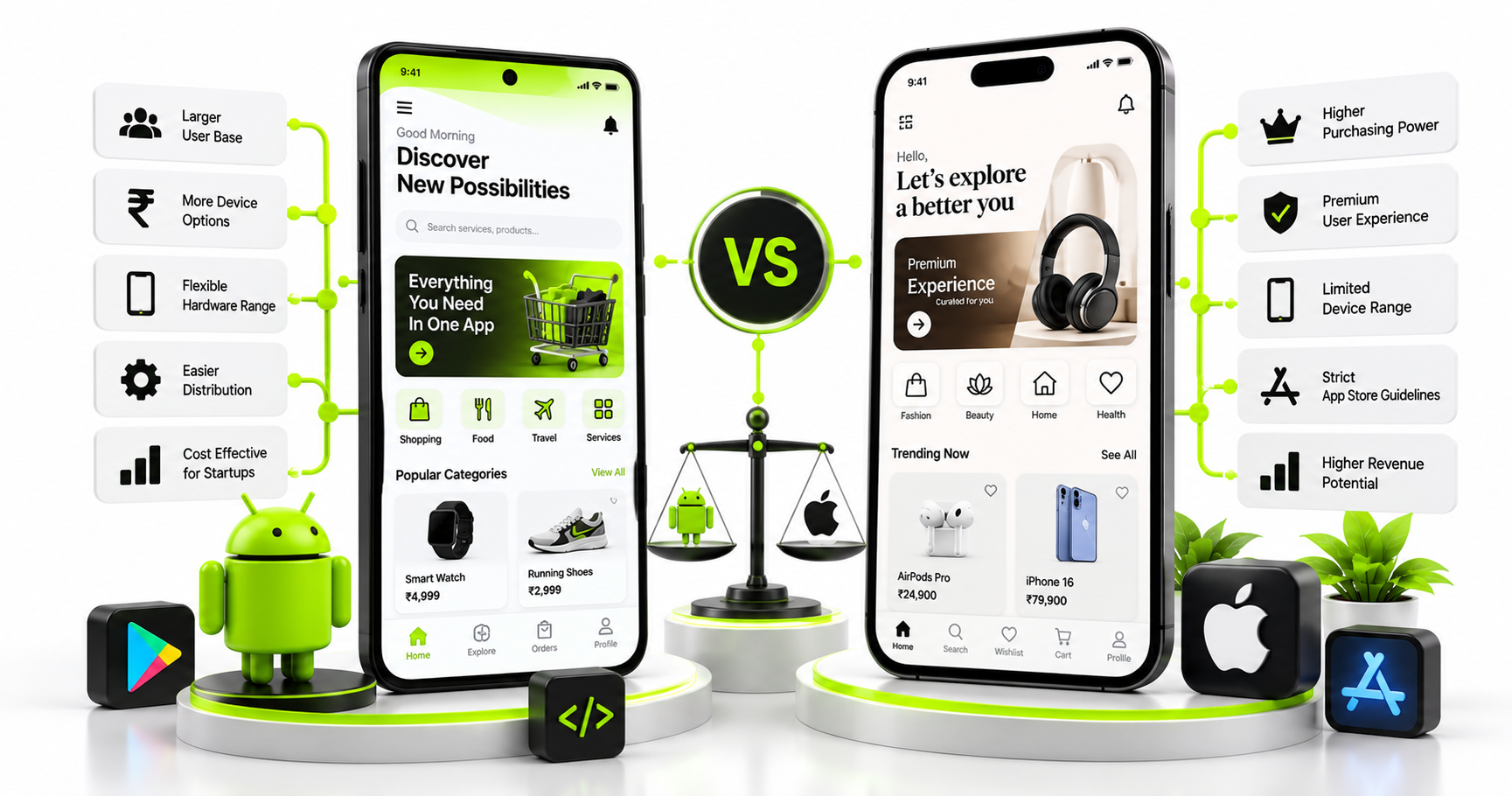
Choosing between Android and iOS app development is an important decision for any startup planning to launch a mobile product. Both platforms offer opportunities to reach customers, but the right starting point depends on your target audience, business model, budget, required features, and launch strategy.
Building for both platforms immediately may seem like the safest option, but it can increase the initial scope and testing requirements. For some startups, launching on one platform first is a practical way to validate demand. For others, supporting Android and iOS from day one may be essential.
This guide compares Android and iOS app development to help you make an informed decision before investing in your application.
What is the difference between Android and iOS app development?
Android is Google's mobile operating system, used by a wide range of smartphone manufacturers. iOS is Apple's mobile operating system, used on the iPhone.
Although both platforms support modern mobile applications, they have different development environments, device ecosystems, distribution processes, and interface conventions.
- Android development: Commonly uses Kotlin, with Java also used in many applications.
- iOS development: Commonly uses Swift, with Objective-C used in some existing codebases.
- Cross-platform development: Frameworks such as Flutter and React Native allow teams to share much of the code across Android and iOS.
The choice of platform influences development effort, but your product requirements and engineering approach are equally important.
Android vs iOS: Key differences
| Factor | Android | iOS |
|---|---|---|
| Device ecosystem | Available across many manufacturers and device categories | Focused on Apple's supported devices |
| Development technologies | Kotlin and Java | Swift and Objective-C |
| Device testing | Requires consideration of device and OS variation | Requires testing across supported Apple devices and OS versions |
| Distribution | Google Play and other supported distribution methods | Primarily the Apple App Store for public consumer distribution |
| Design considerations | Android interface conventions and supported device configurations | Apple interface conventions and device-specific behaviour |
| Maintenance | Updates and compatibility across supported Android configurations | Updates and compatibility across supported Apple OS versions |
| Best starting point | When your validated audience or requirements favour Android | When your validated audience or requirements favour iOS |
Neither platform is universally better. Choose based on your customers, business requirements, and the experience you need to deliver.
Which platform should Indian startups choose?
For startups targeting customers in India, Android may be a practical starting point when the intended audience primarily uses Android devices or when broad device reach is important.
However, do not choose Android simply because your business operates in India. The right platform depends on your specific customer segment, product category, and purchasing behaviour.
For example, a local services application may prioritise the devices commonly used by its target customers. A premium subscription product may need to consider its audience's device preferences and willingness to pay, rather than making assumptions based on geography alone.
Before deciding, research your intended audience and examine any existing website analytics, customer feedback, or early product usage data.
Should a startup launch on iOS first?
An iOS-first launch can make sense when your initial customers are concentrated in the Apple ecosystem, your product has a clearly defined iOS audience, or your early testing strategy focuses on that user segment.
It may also be appropriate when your startup already has evidence that its most valuable customers prefer iPhones.
However, an iOS-first strategy may limit access to potential customers who primarily use Android. Evaluate the likely impact on reach, customer acquisition, and product validation before committing.
The objective is not to choose the platform with the strongest reputation. It is to choose the platform that gives your startup the best opportunity to validate its business model.
Android vs iOS app development cost
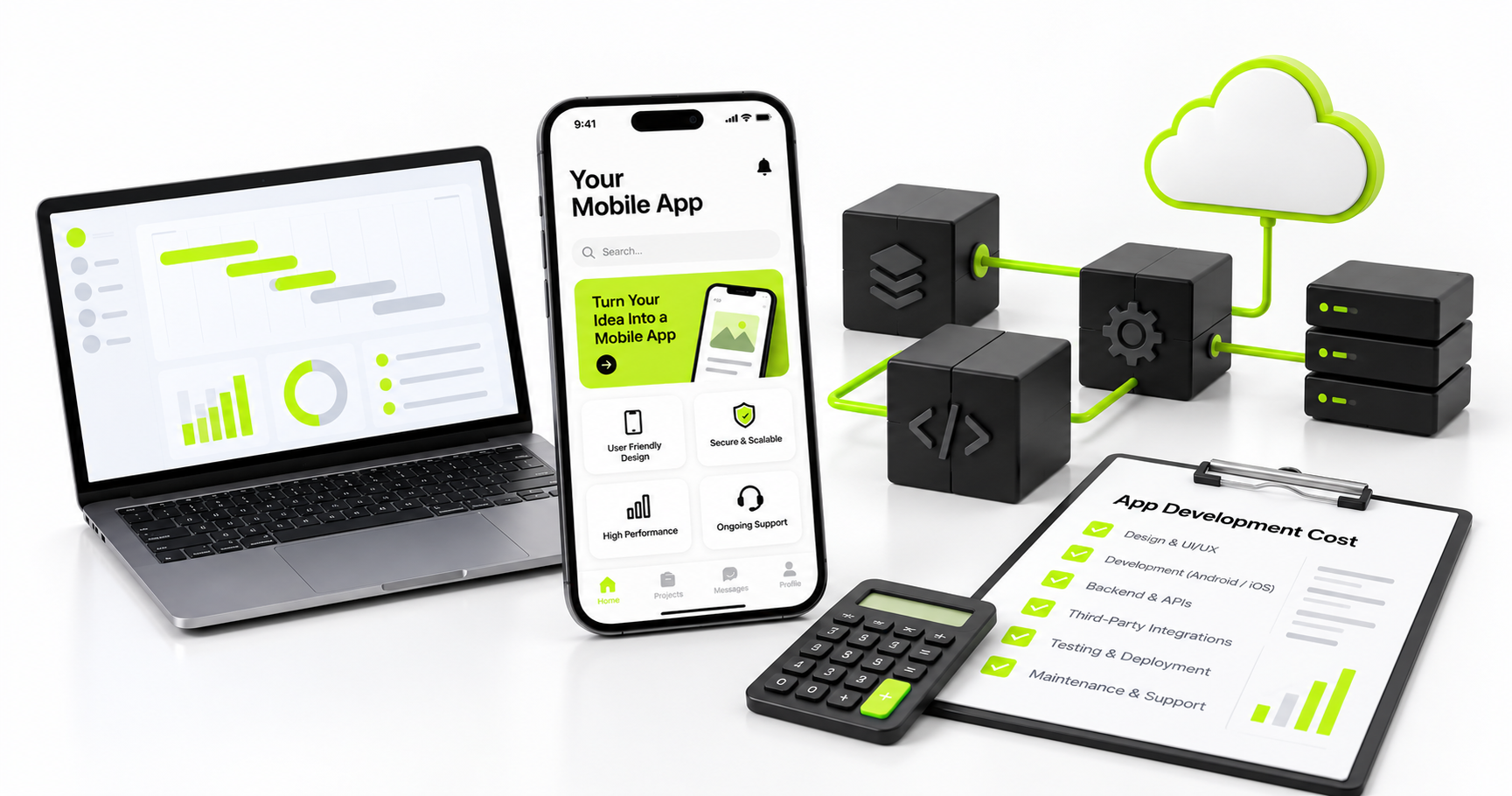
The cost of development depends on functionality, design, backend requirements, integrations, testing, and the team's experience. Neither platform is automatically cheaper for every project.
Your quotation may include:
- Requirements analysis and UI/UX design.
- Mobile application development.
- Backend development, APIs, and databases.
- Payment gateway and third-party integrations.
- Device compatibility and functional testing.
- Deployment and app-store submission support.
- Maintenance, security updates, and ongoing support.
Developing a single-platform MVP can reduce the initial scope when you genuinely need only one platform. However, adding the second platform later may require further implementation, testing, and release work.
For detailed budgeting considerations, read our guide to mobile app development cost in India.
Can you develop Android and iOS apps together?
Yes. You can develop separate native applications or use a cross-platform framework to share much of the implementation.
Cross-platform development can be attractive for startups that want to support both Android and iOS while managing duplicated development effort.
Frameworks such as Flutter and React Native support this approach, although certain integrations and platform-specific features may still require additional work.
Before selecting a framework, confirm that your critical features, libraries, payment integrations, and device requirements are supported. Also ensure the project includes testing on both platforms.
Read our guide to Flutter vs Native App Development for a detailed comparison.
Performance and user experience
Both Android and iOS can support high-quality applications. Performance depends on architecture, implementation quality, network conditions, backend design, and the features being delivered.
Native development provides direct access to platform APIs and interface conventions. Cross-platform frameworks can deliver excellent experiences for many business and consumer applications, provided the implementation is well designed and tested.
Focus on the user experience your business requires, including:
- Simple and intuitive navigation.
- Fast loading and responsive interactions.
- Reliable login, checkout, or booking workflows.
- Clear error messages and recovery options.
- Accessibility and readable interface elements.
- Consistent behaviour on supported devices.
Test important user journeys on representative devices before deciding that a platform or framework is unsuitable.
What about app maintenance?
Both platforms require ongoing maintenance. Operating-system updates, security patches, dependency changes, new device configurations, and evolving business requirements can all affect your application.
Android projects may need to account for a broader range of device configurations. iOS projects also require testing across supported devices and operating-system versions.
Regardless of platform, plan for bug fixes, monitoring, backups, dependency updates, and future enhancements. Confirm whether these responsibilities are included in your development agreement or billed separately.
When should you choose Android first?
Android-first development may be suitable when:
- Your target customers primarily use Android devices.
- Your initial launch depends on broad reach across supported Android devices.
- Your business model has been validated with an Android-focused audience.
- You want to test the core product before expanding to another platform.
- Your product's required features are supported by the selected Android development approach.
When should you choose iOS first?
iOS-first development may be suitable when:
- Your initial target customers primarily use iPhones.
- You have evidence of strong demand from Apple-device users.
- Your initial product or partnership requirements specifically favour iOS.
- Your launch plan is deliberately focused on a defined iOS customer segment.
In both cases, document why the initial platform is appropriate and identify what would trigger expansion to the second platform.
How to decide: A practical checklist
Before choosing Android, iOS, or both, answer these questions:
- Who are your first customers, and which devices do they use?
- Which platform supports your core business requirements?
- Does your product need device-specific functionality?
- What is your initial development and maintenance budget?
- Can you validate the idea with a single-platform MVP?
- Would excluding either platform significantly limit customer acquisition?
- Could cross-platform development meet your technical requirements?
- What evidence will you use to decide when to expand?
These questions help turn the platform decision into a business strategy rather than a technology preference.
How to choose a mobile app development partner
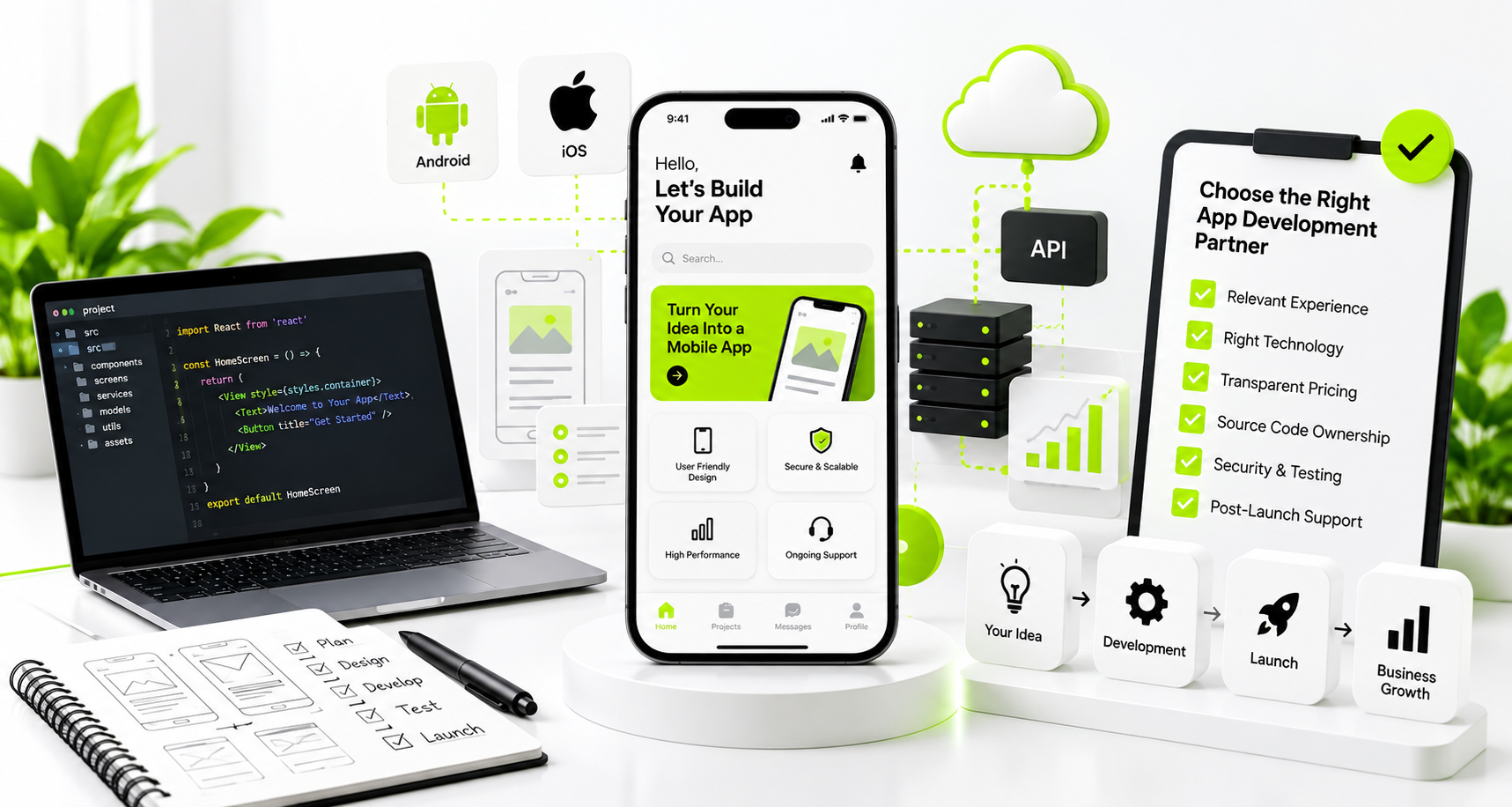
Choose a development company that understands your business goals and can explain the advantages and limitations of each suitable approach.
Ask for relevant project examples, a clear feature breakdown, a delivery plan, testing responsibilities, and transparent commercial terms. Confirm who owns the source code, manages production accounts, and supports the app after launch.
Explore Next Code Company's portfolio and case studies to assess relevant experience. If you are planning an Android app, iOS app, or cross-platform product, discuss your mobile app project with NCC.
Frequently asked questions
Is Android app development cheaper than iOS development?
Not necessarily. Costs depend on the features, architecture, testing, integrations, and development team. Compare proposals based on the same requirements rather than assuming one platform is always cheaper.
Should my startup build Android and iOS apps at the same time?
Build both when your customers, product requirements, and budget justify it. If your initial audience is concentrated on one platform, a focused launch may be practical, provided you understand the trade-offs and future expansion costs.
Can Flutter create both Android and iOS apps?
Yes. Flutter supports both platforms through a shared codebase for much of the application. Platform-specific configuration, integrations, and testing may still be required.
Can I launch on Android first and add iOS later?
Yes. Plan your architecture, backend APIs, and business logic so that future platform development is manageable. Adding iOS later will still require implementation, testing, and deployment work.
Which platform is better for an e-commerce startup?
Choose based on your intended customers, existing sales data, repeat-purchase behaviour, and budget. If you already operate an e-commerce website, assess whether a shared backend can support both mobile platforms efficiently.
Final thoughts
The choice between Android and iOS should be based on your target audience, product requirements, and business strategy. Android can be a practical starting point for some customer segments, while iOS may be appropriate for others. Cross-platform development may help when supporting both is important.
Validate your assumptions, compare the total cost of development and maintenance, and choose the approach that helps your startup deliver value to its first customers.
Next Code Company helps businesses plan and develop mobile applications around their requirements. Contact NCC to discuss your app development strategy.
Published October 11, 2026. This article provides general product-planning guidance, not a guarantee of development costs, performance, or business outcomes.
Related articles
Have a story worth engineering?
We turn strategy into shipped software. Book a free consultation and we'll map the build, the timeline and the cost.