
Frosty Food: Editing Orders After Checkout with Brand Replacements, Balance Payments and Refunds
How we let Frosty Food replace unavailable brands after an order is placed, with customer approval, automatic balance payment requests and tracked refunds.
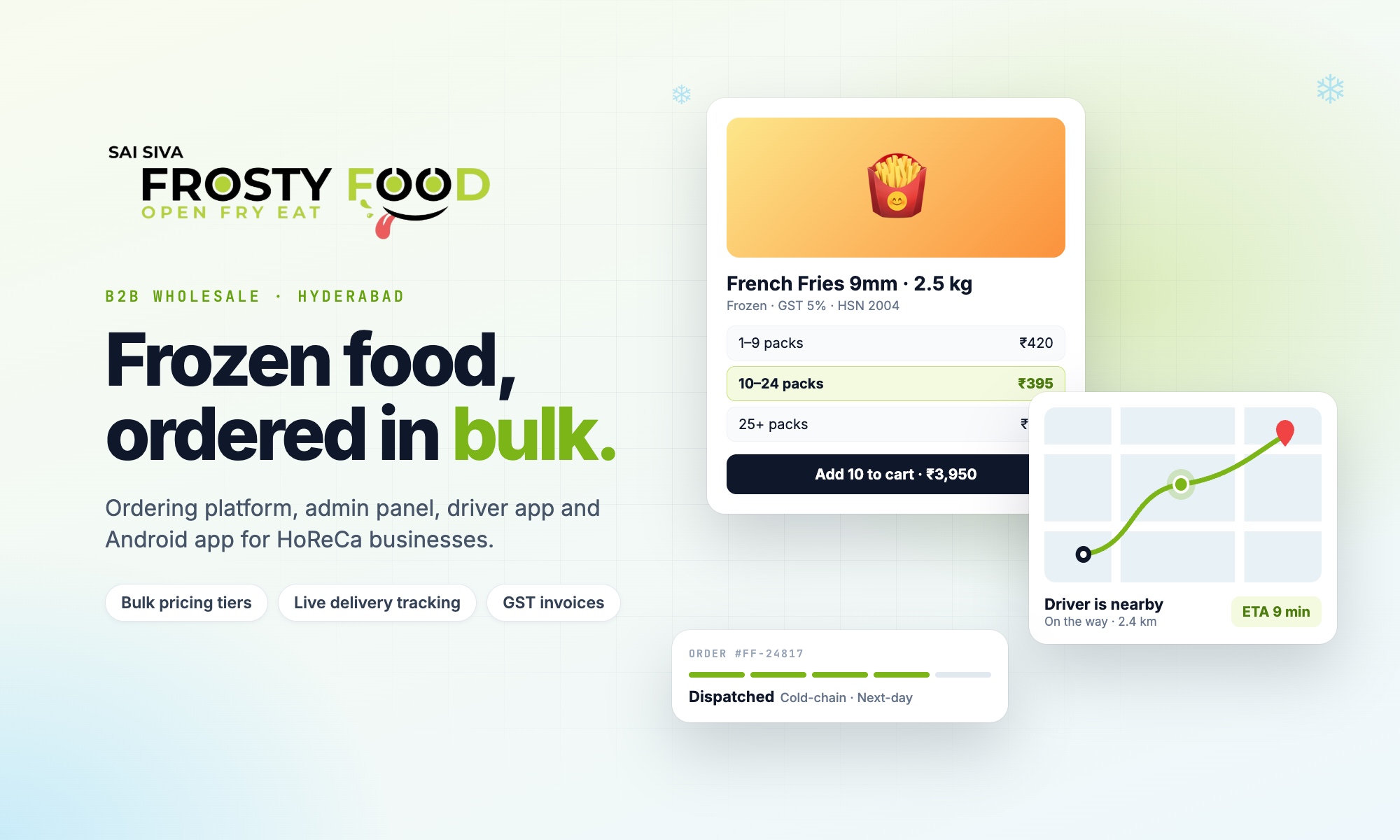
In food distribution, an order rarely ships exactly as placed. A brand runs out, a pack size changes, or the store has a better alternative on the shelf. For Frosty Food, one of Hyderabad's best-known frozen-food brands, these changes used to mean phone calls, manual price corrections and awkward conversations about money. This case study shows how Next Code Company made post-order changes part of the platform itself.
The problem: the order is placed, then reality changes
A restaurant orders a product from one brand. When the store team picks the order, that brand is out of stock, but the same product is available from another brand at a different price. Before the platform, the team had to:
- Call the customer to ask whether the other brand was acceptable.
- Work out the new total by hand, including bulk pricing and GST.
- Chase the extra money if the replacement cost more, or remember to refund if it cost less.
- Make sure nothing was dispatched before the payment was sorted out.
Every step depended on someone remembering, and every mistake showed up later in the accounts.
The solution: replacements and order adjustments, built in
1. The admin proposes a replacement
From the order screen, the admin or store manager replaces an item with another brand or product. The system recalculates the order from the published prices, including bulk tiers and tax, and shows the original total next to the revised one.
2. The customer approves or declines
The customer is notified and sees the proposed replacement in their order, with the old and new items and the new total. They approve or decline it themselves; nothing changes without their consent. While the order is waiting for this decision, it cannot move forward.
3. If the new total is higher: a balance payment request
When the replacement costs more, the system creates an additional payment for exactly the difference and sends the customer a notification: "Payment needed for your order". The customer pays the balance from the order page in the app or on the website.
The order cannot be dispatched or handed to a driver until the additional payment is collected. The team never has to remember to check.
4. If the new total is lower: a refund
When the replacement costs less, the difference becomes a refund. Online payments can be refunded back through the payment gateway; refunds paid another way are recorded with their method and reference. The order's payment status shows "partly refunded" so accounts always match.
5. Nothing gets lost
Every open action (a replacement waiting for approval, a balance due, a refund in progress) appears on the customer's My Orders page and home screen, even if a push notification did not arrive. Staff see the same status in the admin panel, with the full history of what changed and when.
The same engine handles customers adding items
Customers can also add items to an order after placing it, before it is packed. The platform re-prices the whole order (so a larger quantity can reach a cheaper bulk tier) and requests only the extra amount due before dispatch.
The order adjustment flow at a glance
| Situation | What the system does | Customer sees |
|---|---|---|
| Brand or product unavailable | Admin proposes a replacement; total recalculated | Approve or decline the replacement |
| Replacement costs more | Additional payment created; dispatch blocked until paid | "Payment needed" notification and a pay button |
| Replacement costs less | Refund created and tracked to completion | Refund update notification |
| Customer adds items | Order re-priced with bulk tiers | Extra amount to pay before dispatch |
The result
- No surprise charges: customers approve every change before they pay for it.
- No unpaid dispatches: the system holds the order until the balance is paid.
- No forgotten refunds: every refund has a status, a method and a reference.
- Fewer phone calls: the conversation about a replacement happens inside the order.
Why this matters for any ordering business
Restaurants, grocery stores, pharmacies and distributors all face substitutions. An ordering app that only handles the "happy path" leaves the hardest part, changing an order after payment, to phone calls and spreadsheets. Building order adjustments into the platform is what makes it trustworthy for both sides.
Read the full Frosty Food case study, our guide to distributor management systems, or talk to Next Code Company about your ordering platform.
More outcomes we engineered
Want an outcome like this?
Every engagement starts with a free consultation. We'll scope the build, the timeline and the cost — no obligation.