
MSG91 DLT Registration in India: Entity Registration, Sender ID and SMS Template Guide
Learn how to complete MSG91 DLT registration in India, including entity registration, Sender ID approval, SMS template registration, and OTP messaging compliance. Understand the essential steps businesses need to send transactional and promotional SMS through their applications.
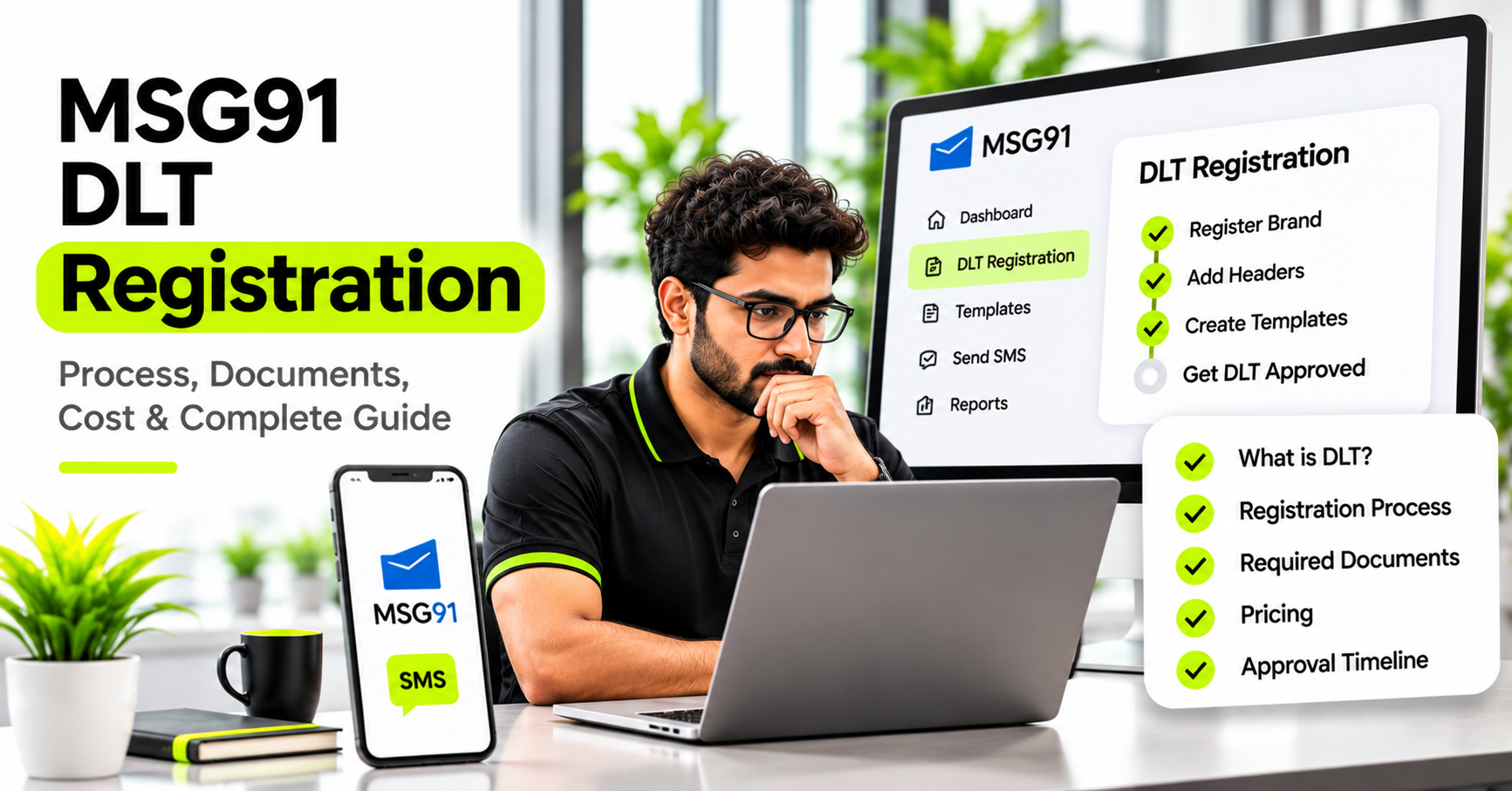
MSG91 DLT Registration in India: Entity Registration, Sender ID and SMS Template Guide
Does your mobile application send OTPs, booking confirmations, payment updates, or promotional SMS messages? If your business communicates with customers through commercial SMS in India, you need to understand DLT compliance.
DLT registration and message-template approvals are important parts of setting up compliant business SMS communication.
What Is DLT Registration?
DLT stands for Distributed Ledger Technology. Telecom operators use DLT-based systems to manage commercial communication and reduce unsolicited or fraudulent messages.
Businesses that send regulated commercial SMS need to complete the applicable registration and approval steps through an authorised telecom operator's DLT portal.
Why Does a Business Need DLT?
Consider a mobile application that sends:
- Login OTPs
- Account verification messages
- Booking confirmations
- Payment notifications
- Order status updates
- Appointment reminders
- Promotional campaigns
These messages must follow the applicable telecom requirements, including registered entities, sender headers, consent where required, and approved content templates.
What Is an Entity ID?
An entity is the business or organisation sending commercial communication. During registration, the business provides information and supporting documents required by the selected DLT operator.
Once approved, the entity receives an identifier used in the commercial messaging ecosystem.
What Is a Sender ID or Header?
A sender header identifies the business or service associated with an SMS. Businesses need to follow the applicable header format and registration rules for the message category.
Approval and availability depend on the relevant telecom operator and current regulatory requirements.
What Is an SMS Content Template?
A content template defines the approved message structure. For example, a booking confirmation may contain a fixed message with variable fields such as a customer name, booking number, or date.
The actual message must comply with the approved template and applicable regulations. Variable fields should not be used to bypass template requirements.
How to Start DLT Registration
- Choose a telecom operator's DLT portal.
- Create an account using the business's authorised details.
- Submit the required entity information and documents.
- Complete any applicable verification and fee requirements.
- Register the relevant sender header.
- Submit the required SMS content templates.
- Complete approval and configure the messaging provider as required.
MSG91 provides a helpful overview at MSG91's DLT Registration Guide.
Does MSG91 Replace DLT Registration?
No. MSG91 is a messaging service provider. Using an SMS gateway does not automatically remove the business's applicable DLT registration, header, template, consent, or compliance responsibilities.
Follow the provider's current onboarding instructions and the requirements of the telecom operator you choose.
What Should You Budget For?
Do not assume every business pays the same registration fee. Charges, document requirements, and approval processes can differ by operator and service provider. Verify the current fee directly on the chosen DLT portal and MSG91 documentation before budgeting.
You should also account for the usage-based cost of OTP and transactional SMS, depending on message volume, route, and provider pricing.
How Does DLT Affect Mobile App Development?
If your app includes OTP verification, booking updates, or payment notifications, the development team needs to design the SMS integration around approved sender and template details.
That is why SMS integration should be included in the project scope rather than treated as an afterthought.
For a complete view of application expenses, read the real cost of building a mobile app in India.
Final Thoughts
DLT is not simply an optional SMS feature. It is part of the compliance and delivery planning required for commercial messaging in India. Start the registration process early so that SMS integration does not delay your application launch.
Need Help Integrating OTP and SMS Into Your App?
Next Code Company develops mobile applications, backend systems, and business platforms with integrations such as OTP, notifications, and payment services.
Discuss your project with Next Code Company.
Related articles
Have a story worth engineering?
We turn strategy into shipped software. Book a free consultation and we'll map the build, the timeline and the cost.